Neapolitan-Style Pizza Dough for a Home Oven
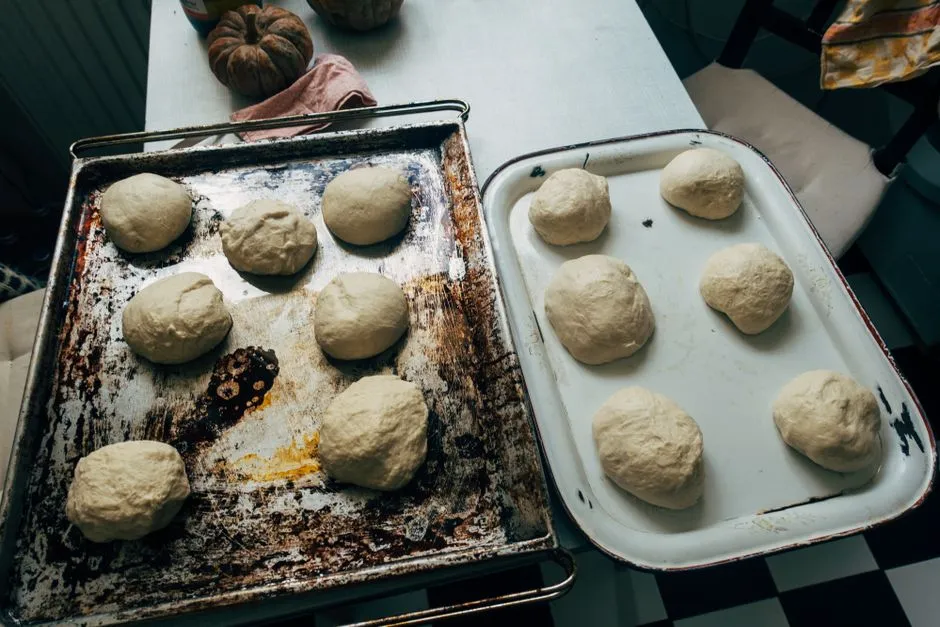
This is a home-oven dough with Neapolitan inspiration
Traditional Neapolitan pizza is tied to particular ingredients, methods, ovens, and cultural practice. This dough borrows its lean formula and soft, extensible handling, then adjusts hydration and fermentation for a domestic kitchen. It is Neapolitan-style, not a claim of certification and certainly not an attempt to fit a wood-fired oven inside the laundry cupboard.
The recipe makes about 838 grams of dough: four balls of roughly 209 to 210 grams, suited to pizzas around 10 to 11 inches.
Formula and baker's percentages
- 500 grams flour, 100%
- 325 grams water, 65%
- 12 grams fine salt, 2.4%
- 1 gram instant yeast, 0.2%
Hydration is 325 divided by 500, or 65%. Salt is 12 divided by 500, or 2.4%. The total dough weight is 838 grams. Divided by four, that is 209.5 grams per ball.
Use a digital scale, including one capable of measuring 1 gram yeast reliably. Volume measures turn a precise little formula into improv theater.
Mix without chasing perfect smoothness
Put 300 grams of the water in a large bowl and stir in the yeast. Add all the flour and mix until no dry pockets remain. Cover and rest for 20 minutes. This pause lets flour hydrate before salt tightens the dough.
Dissolve the salt in the remaining 25 grams water. Pinch and fold that mixture into the dough until absorbed. The dough will feel slippery and uncooperative briefly; keep folding rather than adding flour.
Turn it onto a clean surface and knead for 5 to 8 minutes, or use repeated folds in the bowl, until it becomes cohesive and moderately smooth. It need not resemble polished marble. Dough develops during fermentation too, which is fortunate because your arms have other appointments.
Begin fermentation, then divide
Cover the bowl and leave it at a moderate room temperature for about one hour. After 30 minutes, perform one fold: lift an edge, stretch gently, and fold it over the center, repeating around the bowl.
After the hour, turn out the dough and divide it into four pieces of roughly 209 to 210 grams. Shape each into a tight ball by folding edges underneath and rotating against an unfloured surface. Avoid tearing the outer skin.
Place the balls in individual lightly covered containers or a lidded proofing box with room to expand. Refrigerate for 18 to 48 hours. Cooler fermentation develops flavor and makes the schedule flexible, but refrigerator temperatures and yeast activity differ.
Warm the dough before stretching
Take the containers from the refrigerator about two hours before baking. Keep them covered so the surface does not form a skin. In a cool room they may need longer; in a hot room, less.
Ready dough should look expanded, feel aerated, and spread slightly while retaining structure. Press a floured fingertip gently near the edge. The mark should ease back slowly rather than snapping shut or leaving the dough collapsed.
If a ball becomes extremely slack and fragile, it may be overproofed. Handle it gently or turn it into a small pan pizza instead of adding enough bench flour to qualify as masonry.
Stretch with air left in the rim
Flour the top of one dough ball and the work surface lightly. Turn the ball out, keeping its top side facing up. Press from the center outward with fingertips, stopping about 1/2 inch from the edge. This moves gas toward the rim.
Lift the disk and stretch it over the backs of your hands, rotating carefully, or continue pressing and turning on the counter. Do not use a rolling pin if you want a puffy rim; it expels the gas you spent a day cultivating.
Stop around 10 to 11 inches or when the center is thin but not translucent and fragile. If the dough springs back, cover it and rest for 10 minutes. Force is not gluten's love language.
Our guide to baking Neapolitan-style pizza at home covers the stone or steel, topping quantities, launch, and turn. The pizza dough collection holds the underlying rule: temperature and feel adjust the clock, while the measured formula keeps the starting point stable.
Do not taste raw dough because uncooked flour can carry harmful microbes. Wash hands and surfaces after handling raw flour, and keep dough covered and refrigerated through its cold fermentation.